Ballycarbery Castle logo
Ballycarbery Castle Legacy Project
History • Architecture • Photography
Ballycarbery Castle logo
A living legacy of stone, sea, and legend

The Story of Ballycarbery Castle

An evolving research archive bringing together historic sources, architectural understanding, and a photographic record.
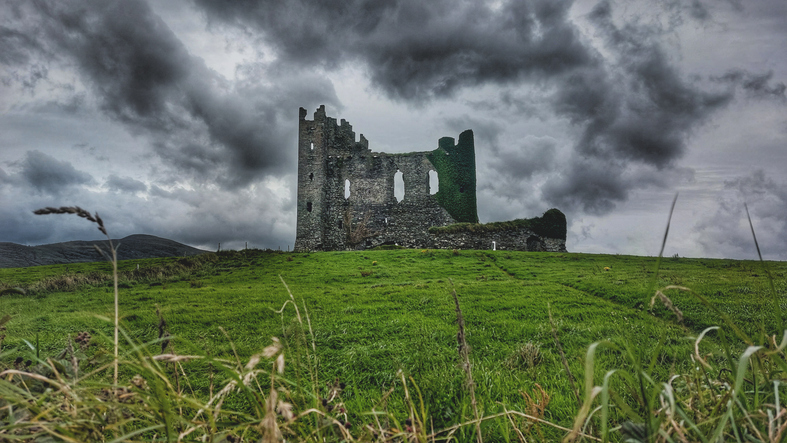
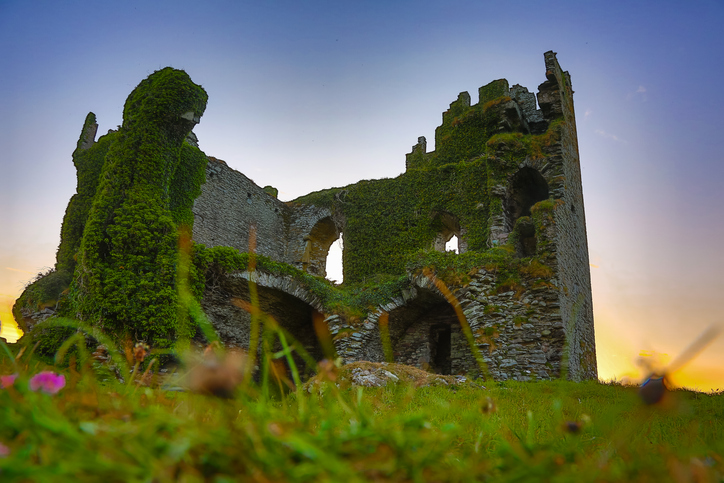
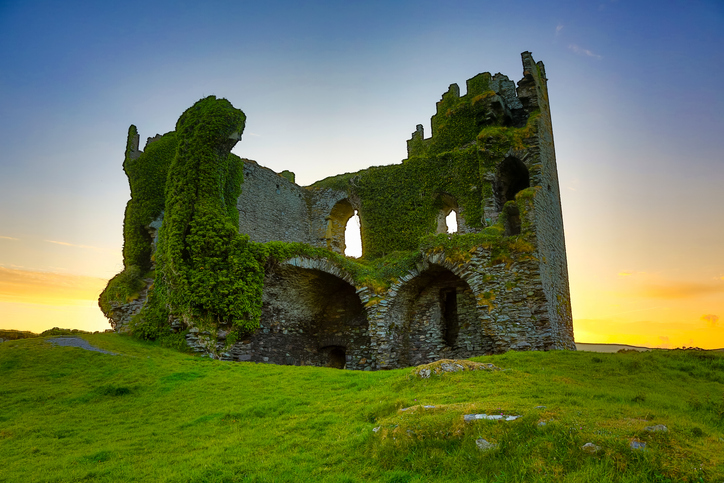
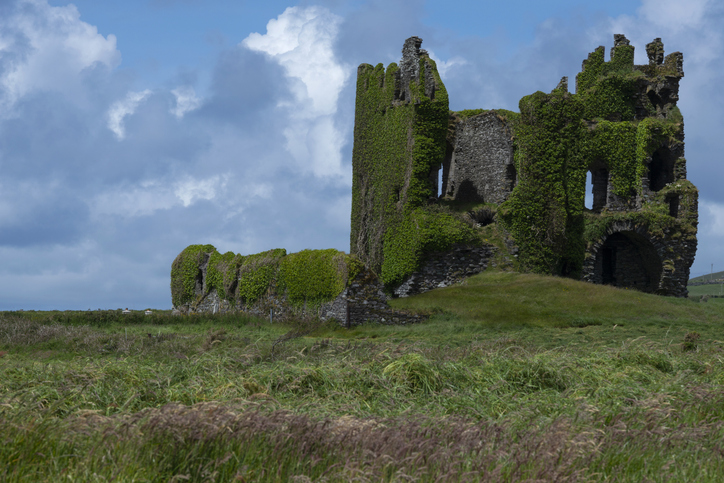
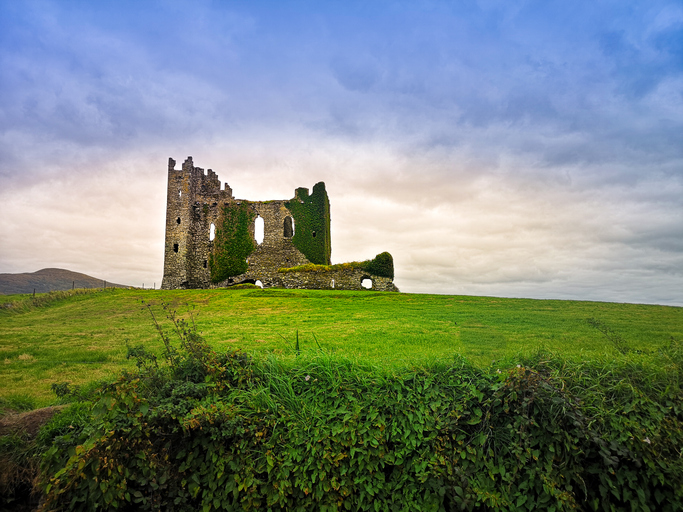
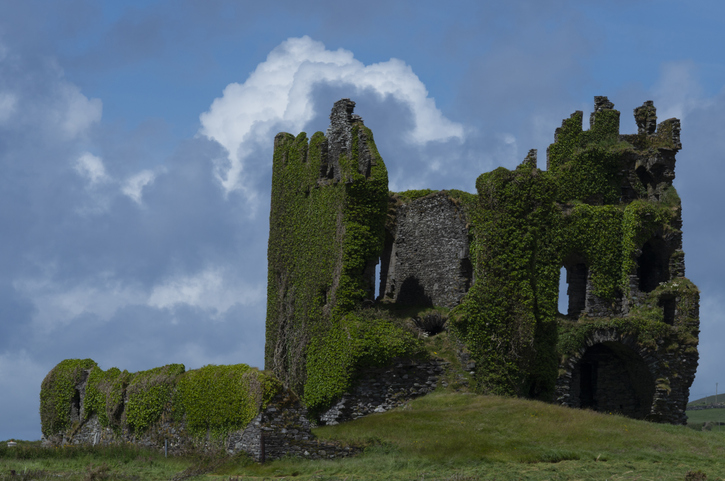
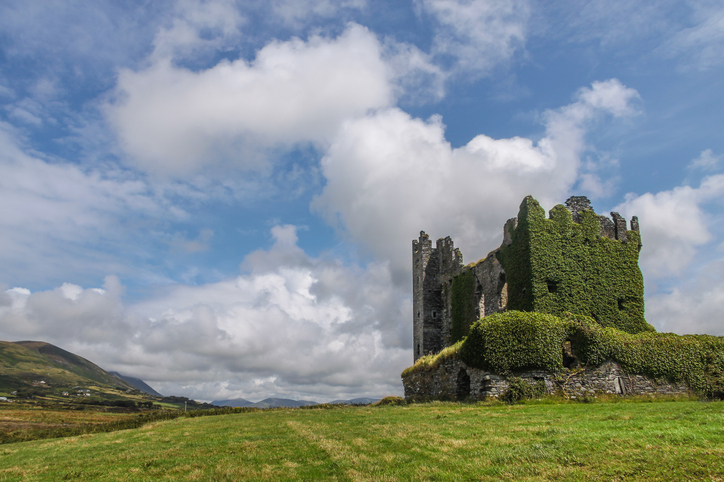
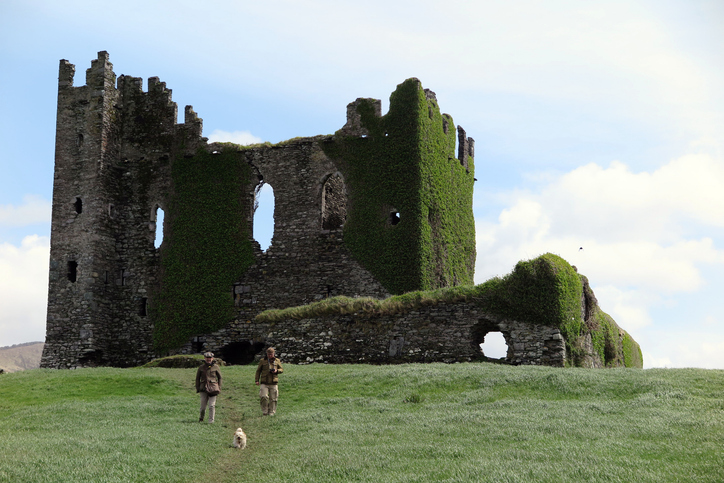
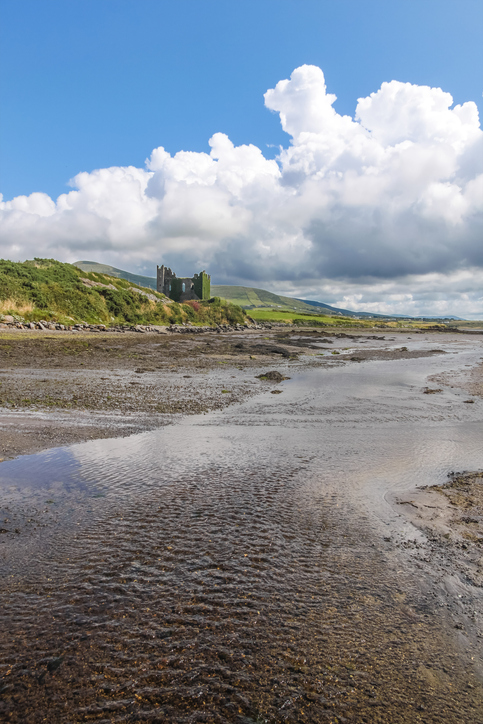
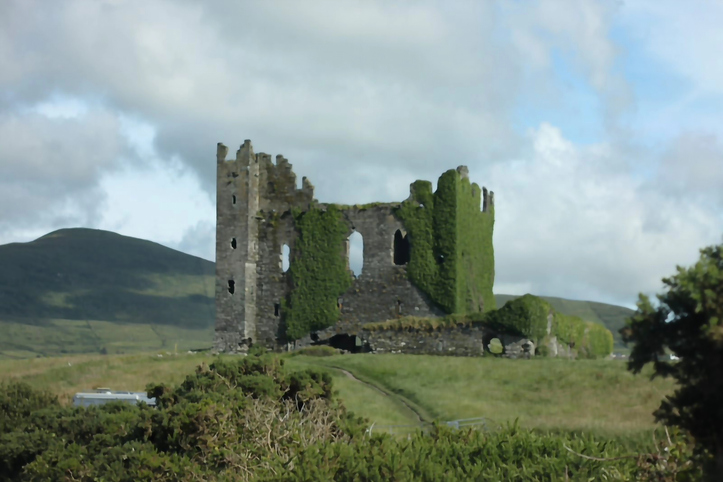
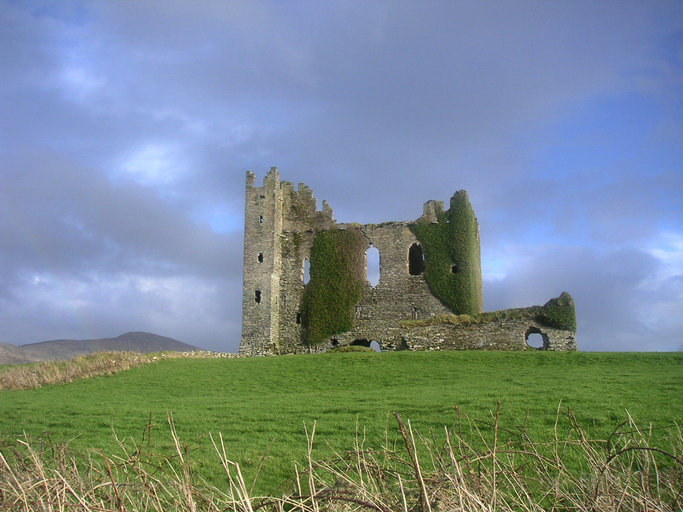
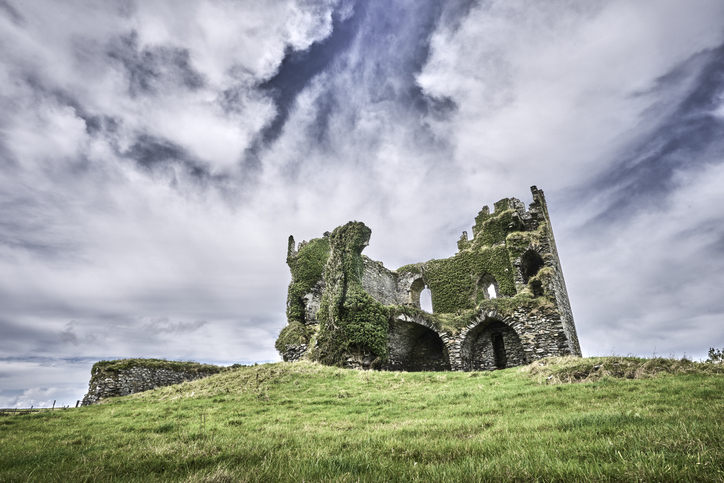
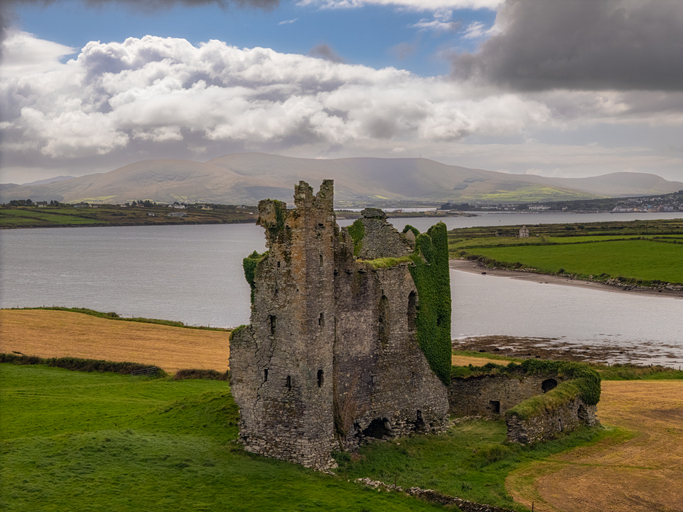
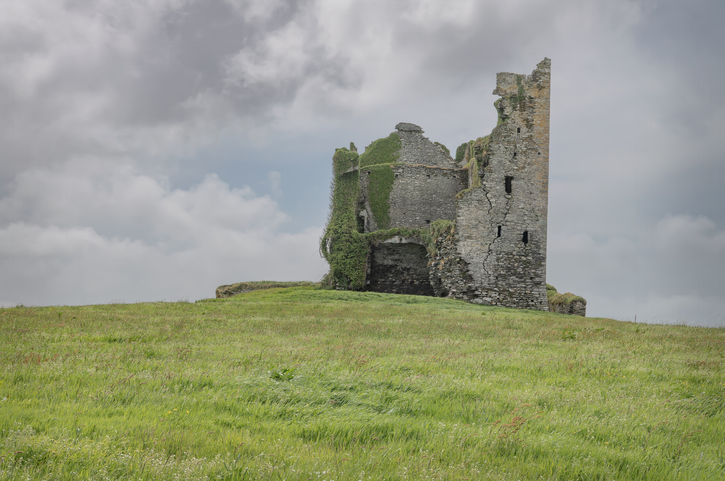
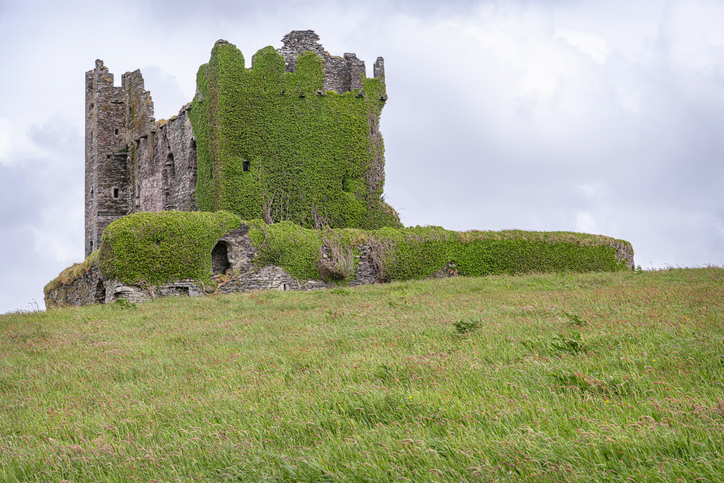
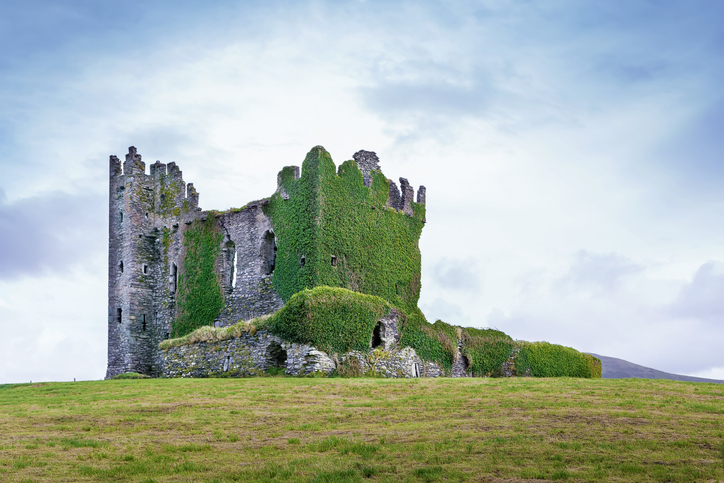
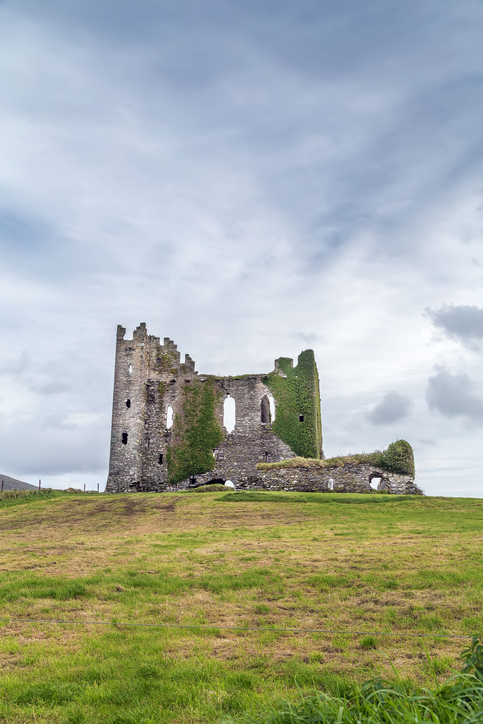
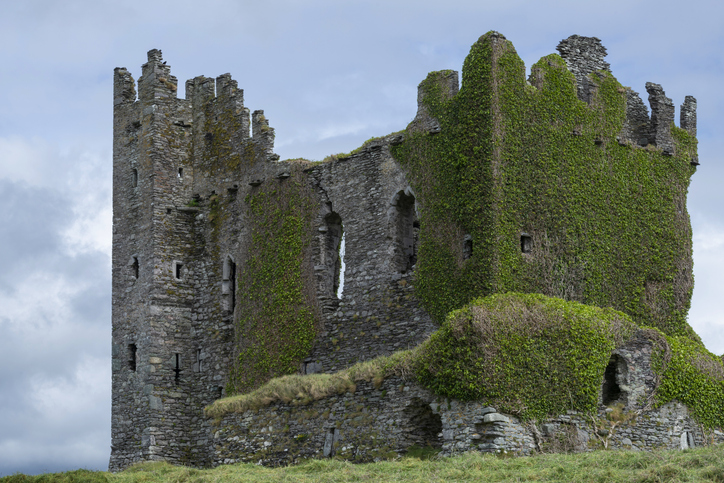
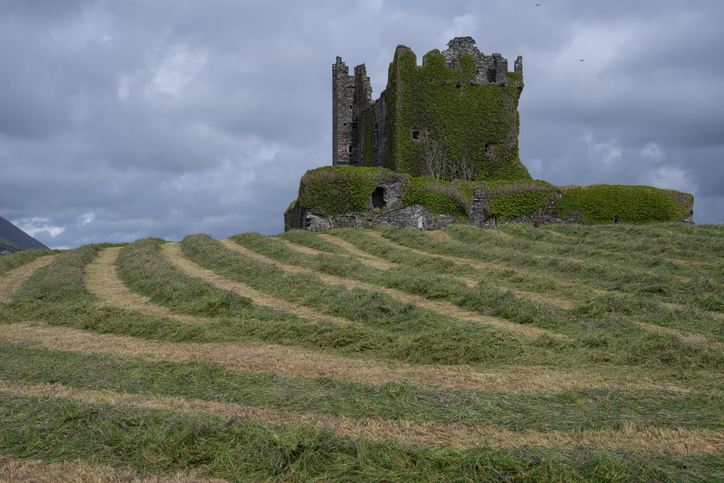
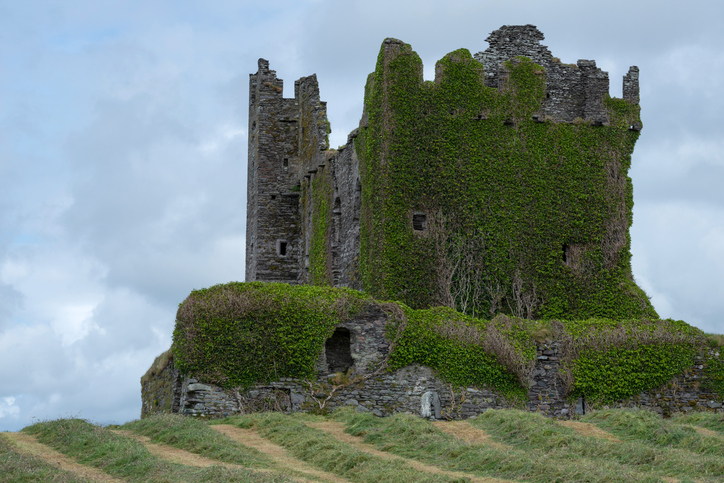
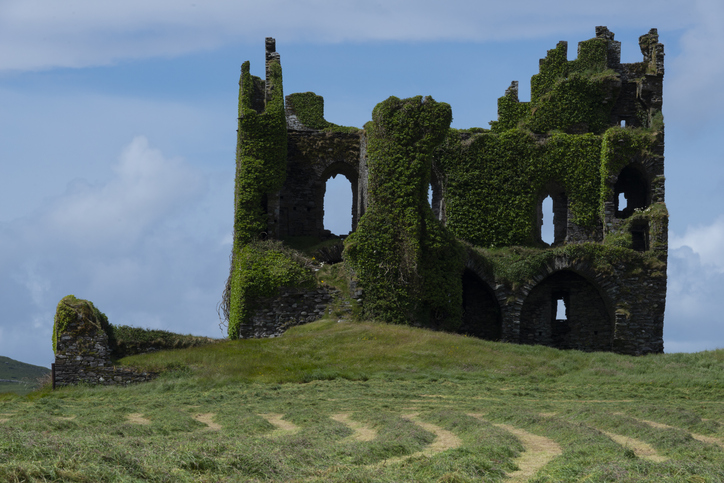
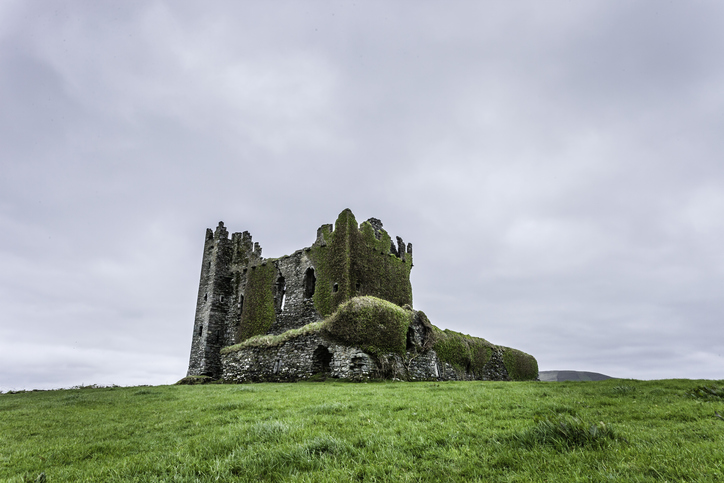
Ballycarbery Castle ruins in Ireland
A living archive
This site will serve as an evolving research archive dedicated to Ballycarbery Castle. As historical records are examined, architectural details studied, and local traditions carefully evaluated, new information will be added and existing interpretations refined. Our goal is to present clear, well-sourced material that makes the castle’s history understandable and engaging for all readers, whether academic or simply curious. Over time, this space will grow to include documented history, contextual analysis, and a visual record of the structure as it stands today.
A personal welcome
If you have found your way here, you likely feel something about Ballycarbery yourself. Perhaps it is curiosity, perhaps admiration, or perhaps something harder to name.
For me, Ballycarbery has never been simply a destination on a map. It has been a calling. I first discovered Ballycarbery nearly twenty years ago, and from that moment, something about her stayed with me, a constant beaconing if you will. The more I learned, the stronger that connection and call became.
Though the voices of those who once lived within these walls are no more, their presence remains. In the stone, in the landscape, and in the Atlantic wind that still moves throughout.
This project is born from deep admiration and respect, not just for the history of the castle but for the generations who shaped it and for those who care for it today. As long as Ballycarbery stands, I feel a responsibility to help preserve and share her story til the last stone.
About the Castle
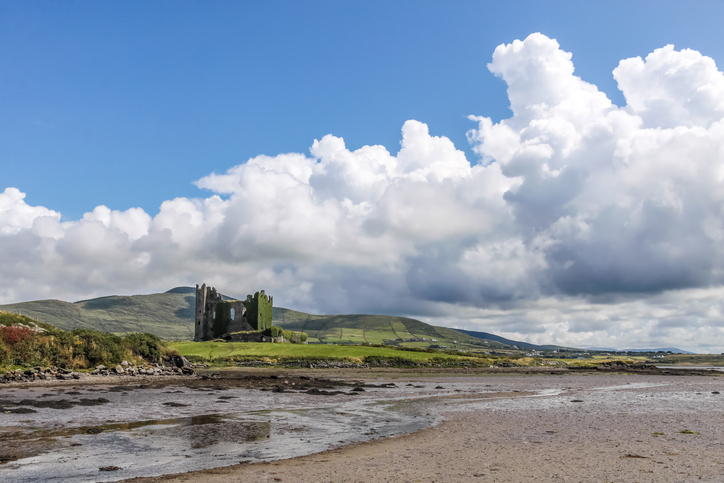
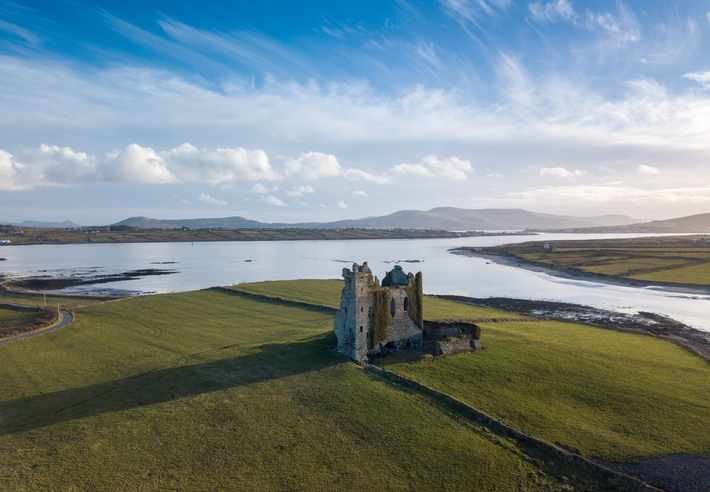
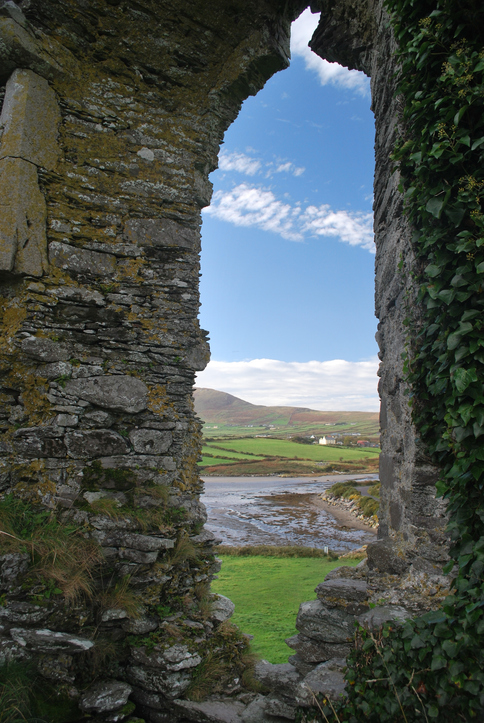
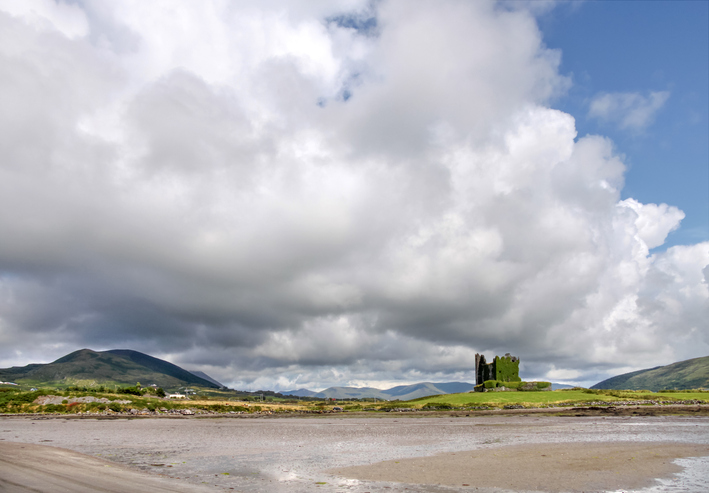
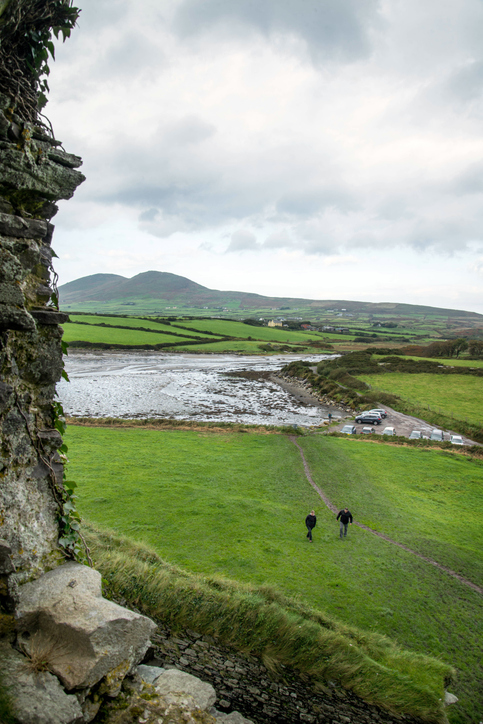
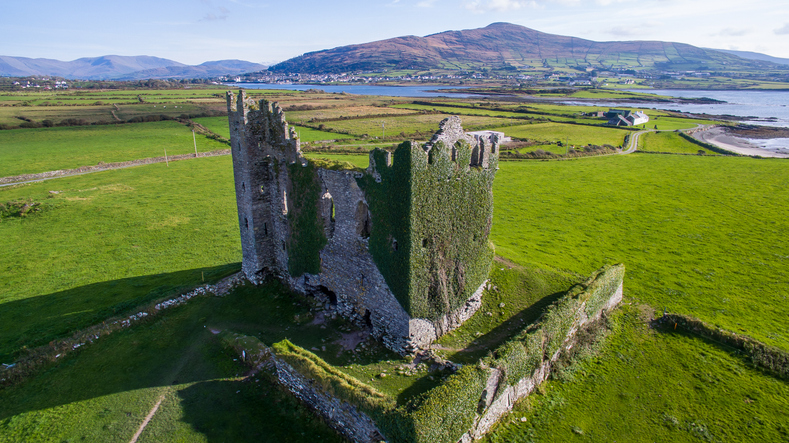
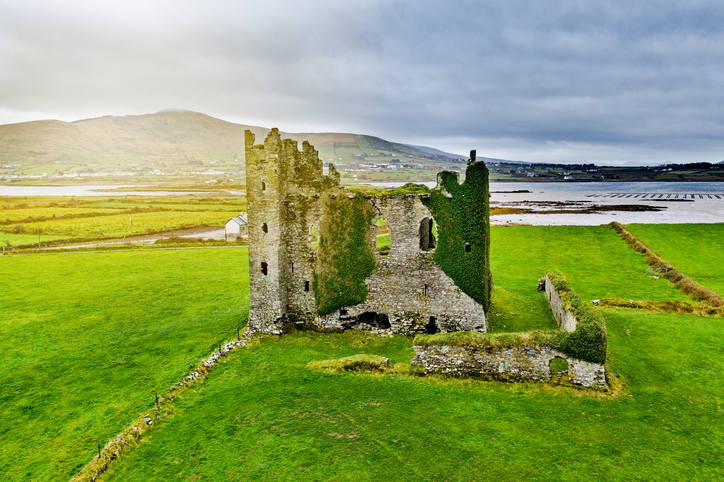
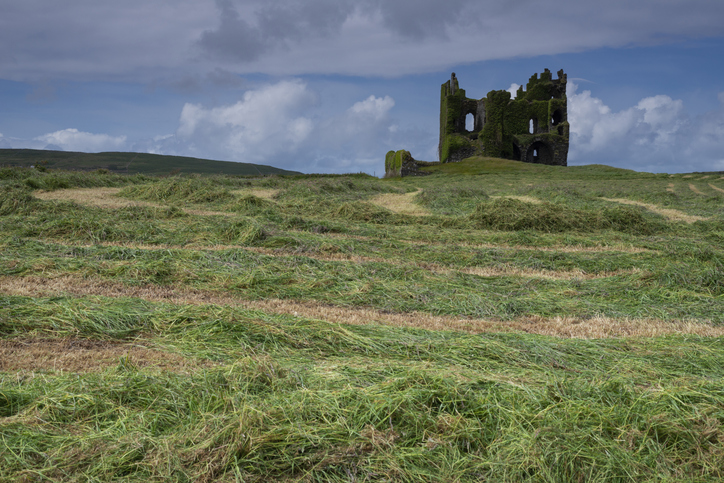
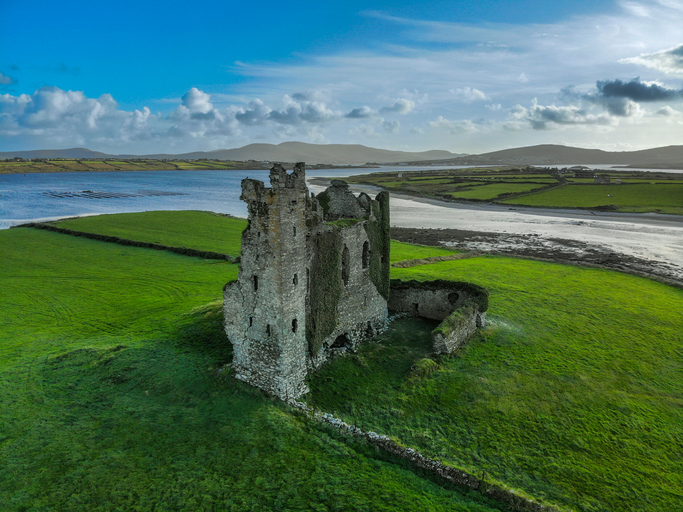
Ballycarbery Castle is one of County Kerry’s most striking medieval ruins, dramatically situated on a low eminence overlooking the estuary of the River Fertha, just west of Cahersiveen and about a mile from the Atlantic Ocean. From its walls, the land opens toward Valentia Island and the wide Atlantic approaches, a landscape of sea lanes, tidal inlets, and sheltered anchorages that has shaped power here for over a thousand years.
A Landscape of Kings and Sea Routes
Long before the tower-house of Ballycarbery rose above the inlet, this was already a centre of elite settlement. Just to the north stands Cahergal, an imposing early medieval stone fort constructed between the 7th and 9th centuries. Archaeological excavations suggest it was a high-status, possibly royal, site used for ceremony, feasting, and political assembly. Nearby lie Leacanabuaile and Caher na Gath, forming a rare concentration of monumental stone forts within a few hundred metres.
The wider harbour landscape was also linked to Viking maritime activity. Excavations on Beginish Island in Valentia Harbour indicate Norse settlement and sea-based trade in the 9th–11th centuries. The inlet overlooked by Ballycarbery was therefore already part of a strategic Atlantic network centuries before the MacCarthy lords built their castle.
Ballycarbery did not emerge in isolation. It was the late medieval successor to a long-established coastal power centre.
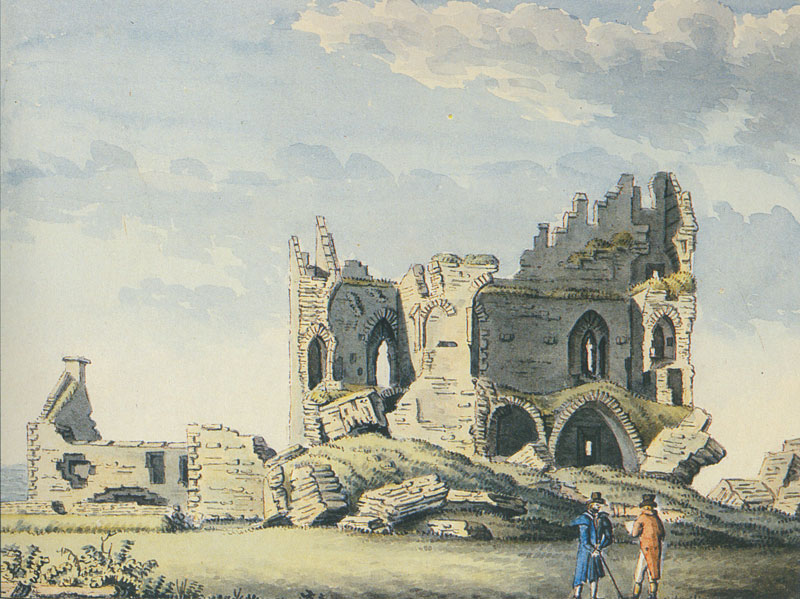
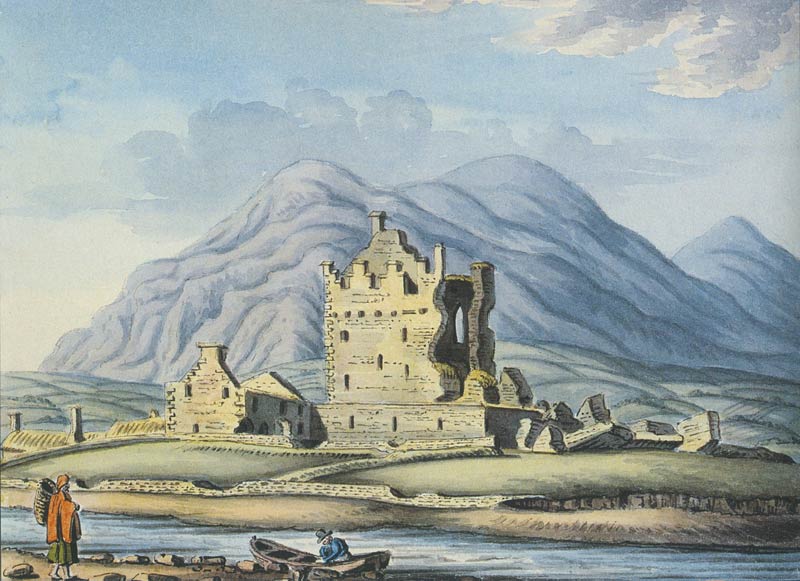
1792 Painting Daniel Grose
1792 Painting Daniel Grose Looking Northeast
Architecture & Layout
The castle was originally a substantial rectangular tower-house measuring approximately 76 feet east to west by 42 feet north to south. It was surrounded by a defensive enclosure, or bawn, portions of which still survive along the western and northern sides.
Built of locally quarried green stone, the structure had walls more than 9 feet thick at the base. Surviving features suggest:
  • A north-eastern corner tower rising roughly 60 feet
  • A vaulted ground floor with large stone-arched storage chambers
  • Upper living quarters with spacious halls and mullioned windows
  • Embrasures, slit windows, and controlled access points typical of late medieval tower-houses
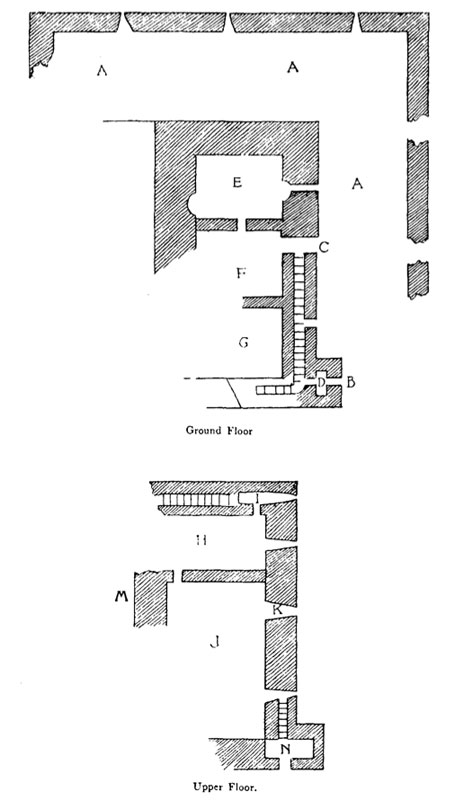
Though defensive, Ballycarbery reflects a transitional period in Irish castle-building. The large windows and refined masonry suggest not only military strength but also status and comfort. It was both fortress and lordly residence.
Plan of Ballycarbery Castle
Ballycarbery Castle Ruin Floor Plan
The MacCarthy Mór and Gaelic Power
Architectural evidence places the construction of Ballycarbery in the late 15th or early 16th century. It is generally attributed to the MacCarthy Mór family, powerful Gaelic rulers whose territory extended across much of southwest Munster.
The MacCarthys had long contested the region with the Anglo-Norman Fitzgerald Earls of Desmond. Medieval accounts describe cycles of warfare in which castles across Kerry were seized, burned, or demolished during shifting alliances and rebellions. Ballycarbery stood within this turbulent frontier between Gaelic lordship and expanding English influence.
The O’Connell family served as constables of the castle under the MacCarthy Mór. Records from the reign of Elizabeth I reference O’Connells “of Ballycarbery,” and one Morgan O’Connell served as High Sheriff of Kerry. These references confirm the castle’s continued occupation into the late 16th century, during the era of the Desmond Rebellions.
Contemporary correspondence emphasized the strategic importance of controlling the sea approaches near Valentia Harbour, a significant anchorage for Atlantic traffic. Ballycarbery’s position allowed oversight of vessels entering the sheltered waters of southwest Kerry.
Spanish Connections and Atlantic Trade
During the 15th and 16th centuries, southwest Ireland maintained active maritime connections with Spain. Trade in wine, salt, and other goods passed through Atlantic harbours, and local tradition holds that Spanish ships anchored in Valentia Harbour below the castle.
One enduring story recounts rival O’Connell brothers attempting to outdo one another in hospitality for an important visitor, boiling provisions in Spanish wine when denied water. Whether legend or embellished memory, such tales reflect Ballycarbery’s identity as a coastal stronghold engaged in Atlantic exchange.
Warfare and Destruction
The late 16th and early 17th centuries were marked by rebellion, suppression, and shifting loyalties. Archaeological evidence from nearby Cahergal indicates continued activity into this period, including ironworking and large-scale cattle slaughter that may relate to military provisioning or assembly.
Ballycarbery was likely captured and destroyed during the Cromwellian campaigns of the mid-17th century. Earlier tradition suggested that artillery from the nearby inlet battered the castle before its final collapse. However, recent research by a scholar at University College Cork proposes a different conclusion: that the structure may instead have been deliberately demolished using internal explosives, a method commonly employed by Parliamentary forces to render strongholds permanently unusable. By the 1650s, the castle appears to have been effectively reduced and abandoned.
1792 Painting Daniel Grose
1792 Painting Daniel Grose Looking Slightly Northwest
Decline, Stone Robbing, and Preservation
By the early 20th century, Ballycarbery had already suffered centuries of collapse and neglect. Reports from 1910 record that portions of the outer wall were dismantled by a local tenant for building stone, prompting public appeals for preservation. Though calls were made for official protection, the castle remained an exposed ruin.
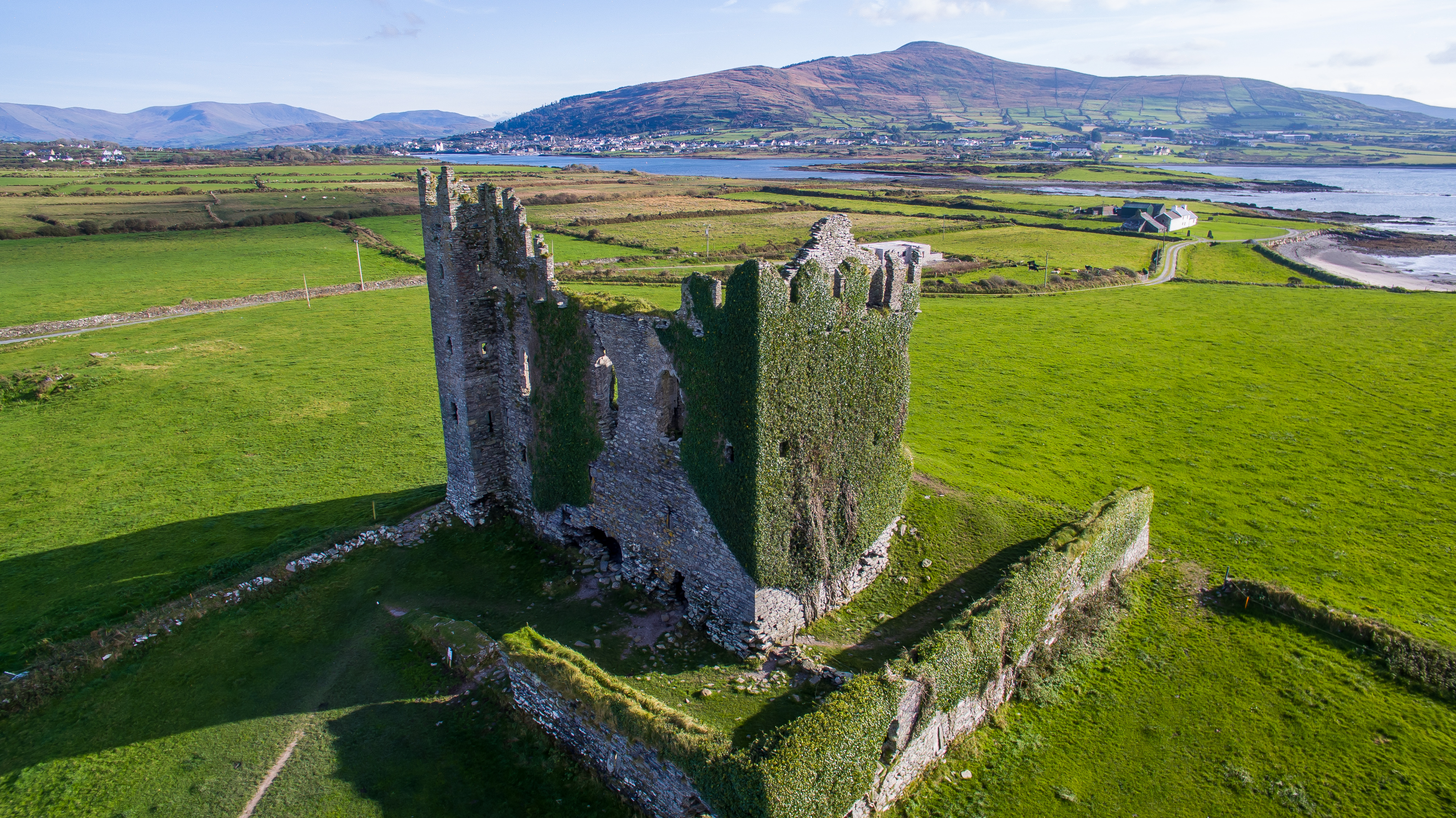
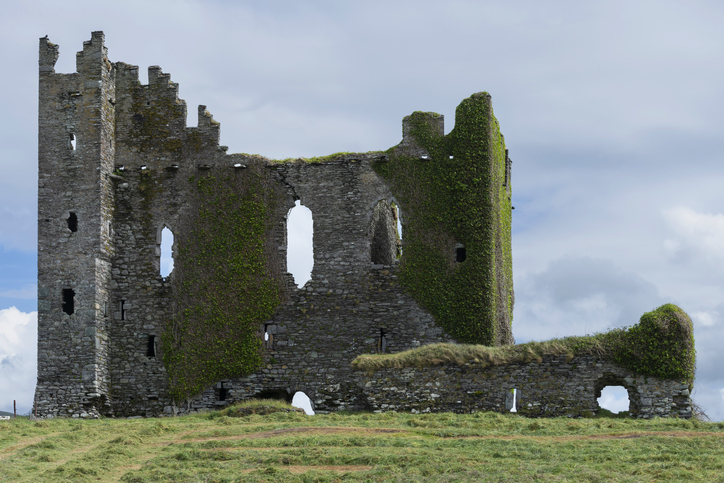
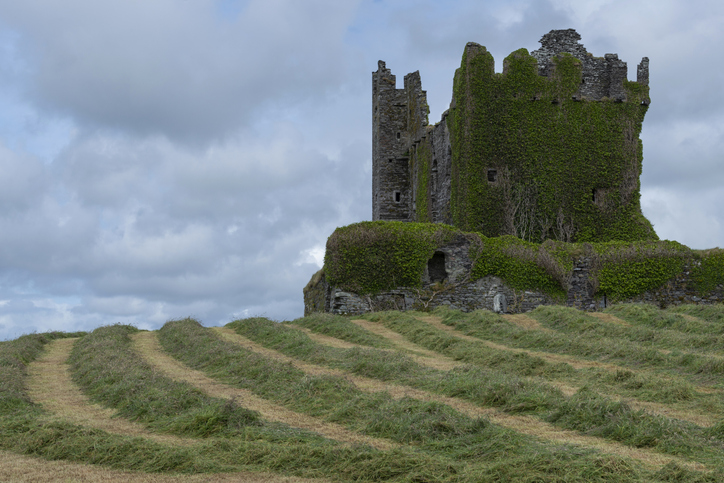
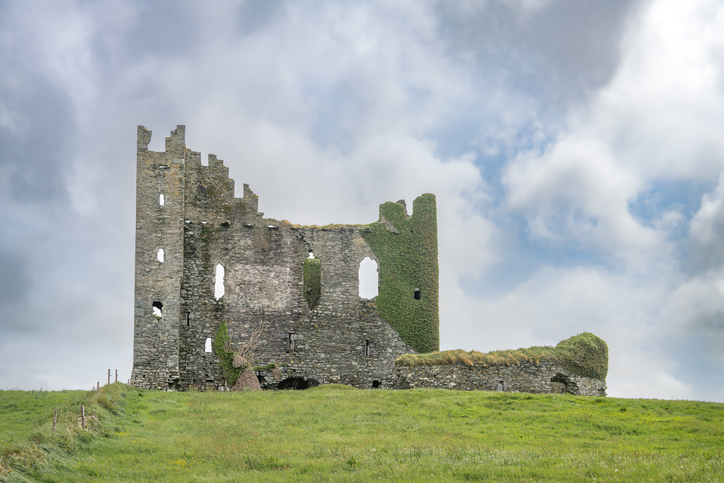
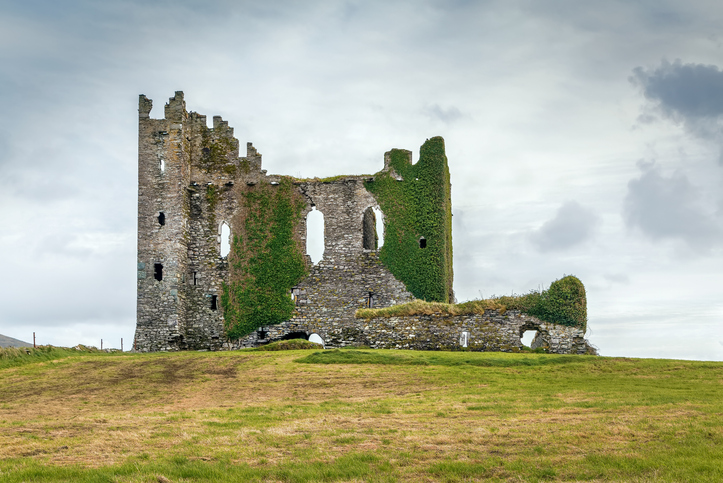
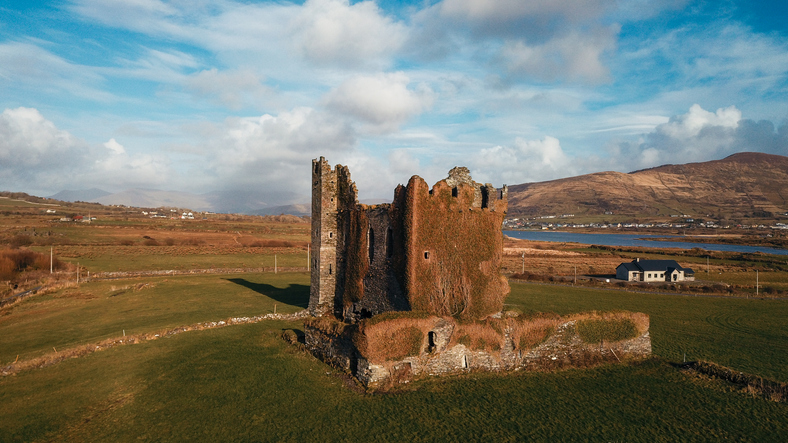
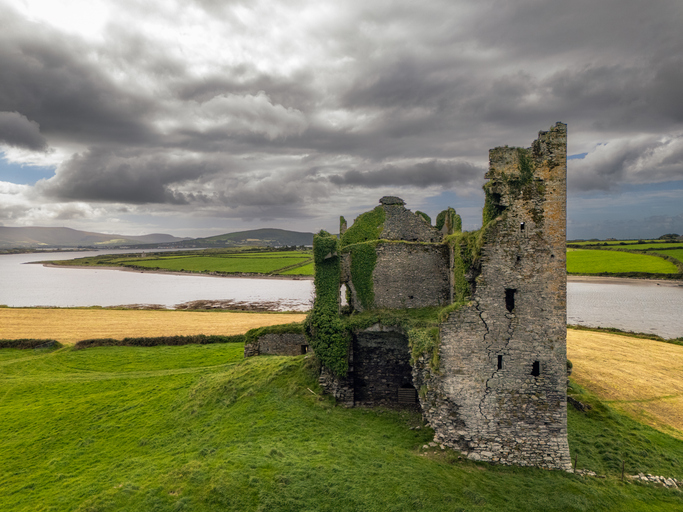
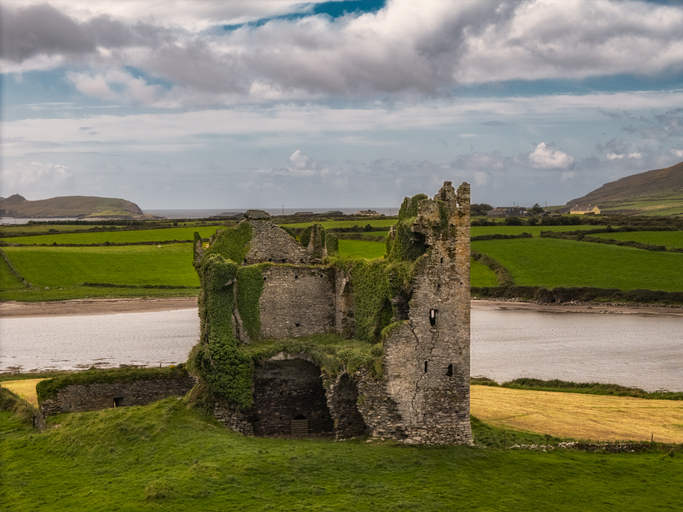
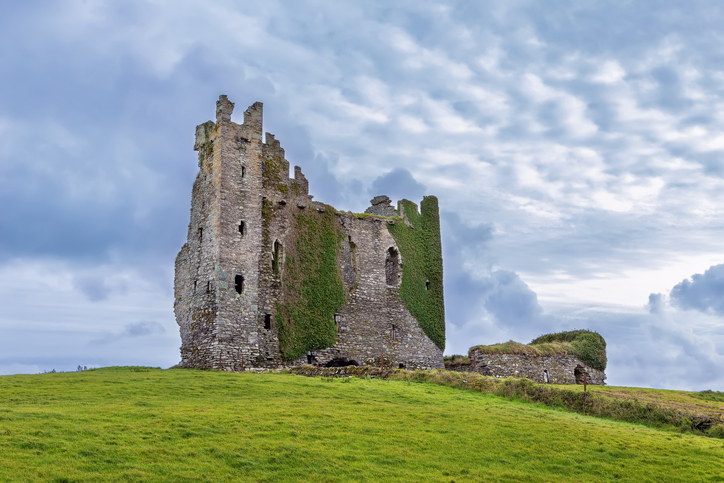
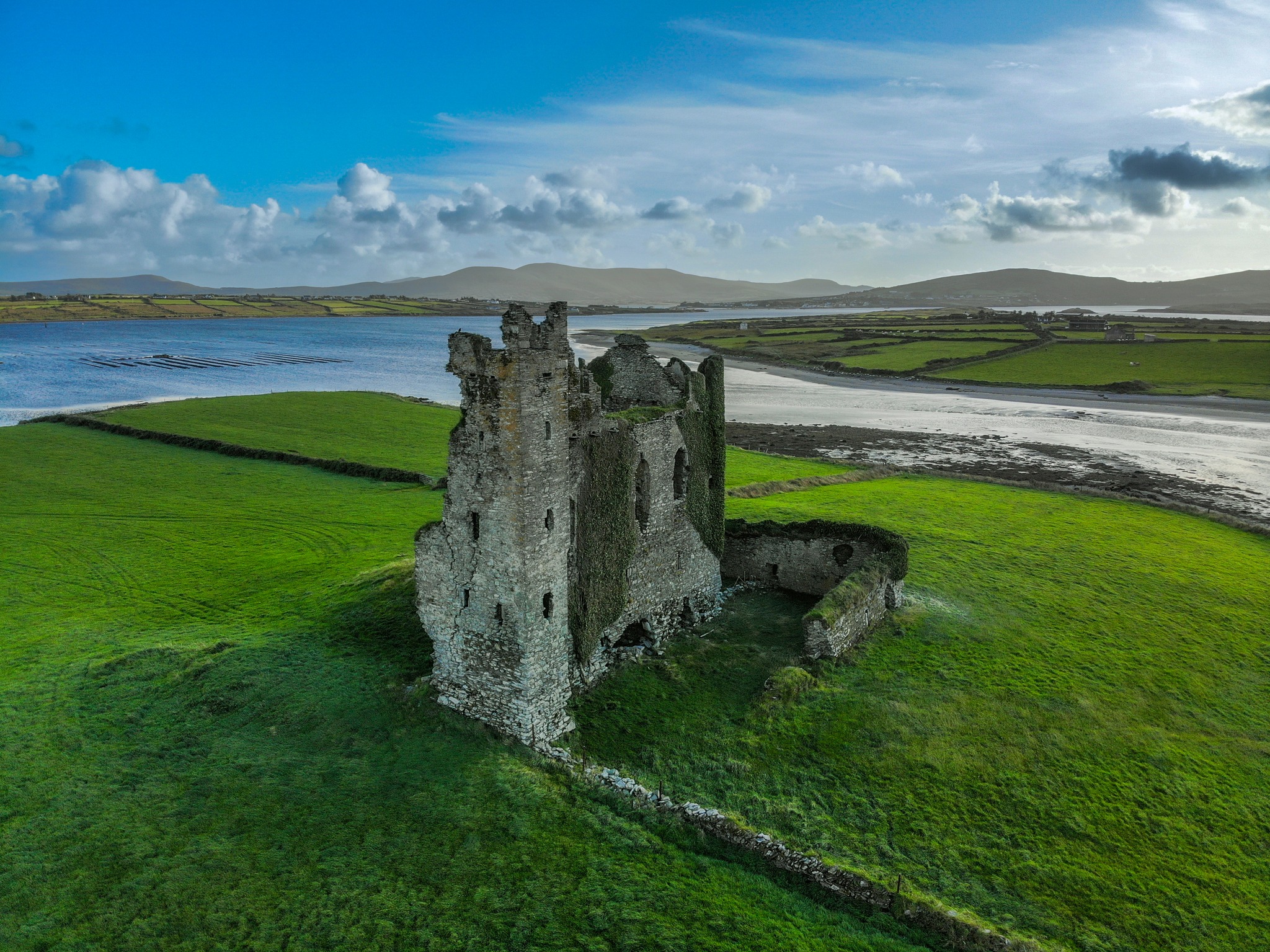
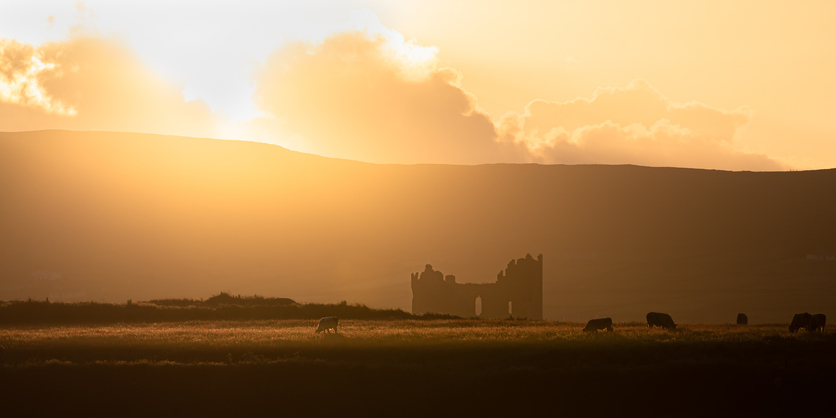
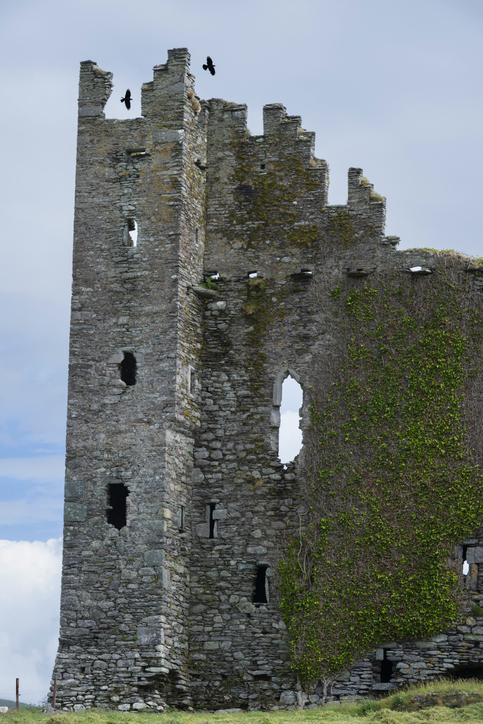
Today, its southern and eastern walls have largely fallen, while the northern tower and sections of the western wall continue to rise dramatically above the grasslands, weathered by the Atlantic wind yet unmistakably imposing.
Ballycarbery's Legacy
Ballycarbery Castle is more than a photogenic ruin. It stands within a landscape shaped by early medieval kings, Viking seafarers, Gaelic chieftains, Atlantic traders, and Cromwellian soldiers. Its walls witnessed ceremony, conflict, hospitality, and destruction.
As new generations discover the castle, whether drawn by history, archaeology, or cinema, Ballycarbery endures as one of Kerry’s most evocative reminders of Ireland’s layered and turbulent past.
Ballycarbery Castle
Drone Shot Facing Southeast
Research Sources

Cochrane, Robert. “Ballycarbery Castle, County Kerry.” The Journal of the Royal Society of Antiquaries of Ireland, vol. 40, no. 1, 1910, pp. 56–57. JSTOR, www.jstor.org/stable/25514045. Accessed 27 Feb. 2026.

Lecky, John, and M. J. D. “Notes on Some Kerry Antiquities: Cahergal and Other Fort.” Kerry Archaeological Magazine, vol. 3, no. 13, 1914, pp. 49–54. JSTOR, doi.org/10.2307/30022078. Accessed 27 Feb. 2026.

Manning, Conleth. “Excavations at Cahergal, Co. Kerry: A Venue for Royal Ceremony in Early Medieval Corcu Duibne.” Proceedings of the Royal Irish Academy: Archaeology, Culture, History, Literature, vol. 116C, 2016, pp. 121–88. JSTOR, doi.org/10.3318/priac.2016.116.08. Accessed 27 Feb. 2026.

McCarthy, S. T. “The Clann Carthaigh (Continued).” Kerry Archaeological Magazine, vol. 1, no. 5, 1910, pp. 233–51. JSTOR, doi.org/10.2307/30059635. Accessed 27 Feb. 2026.

S. M. “Ballycarbery Castle.” Kerry Archaeological Magazine, vol. 3, no. 16, 1916, pp. 243–59. JSTOR, doi.org/10.2307/30059746. Accessed 27 Feb. 2026.

Talbot-Crosbie, Bligh. “Ballymacquim Castle.” Kerry Archaeological Magazine, vol. 1, no. 5, 1910, pp. 254–60. JSTOR, www.jstor.org/stable/30059637. Accessed 27 Feb. 2026.

Upcoming Research
  • 8K 360° immersive photo and video documentation
  • Full high-resolution LiDAR scanning of the structure
  • High-accuracy structural survey and dimensional measurements
  • Detailed architectural analysis highlighting overlooked structural features
  • Ongoing findings as new research develops
Beyond the Castle
Ballycarbery’s presence extends far beyond its stones. Over the years it has inspired storytelling, appeared in popular culture, and is now drawing fresh attention through film.
Fiction Inspired by Ballycarbery
Ballycarbery Castle appears as an evocative setting in the O’Farrell Legacy series by S. M. Cross. While the novels span themes of legacy and connection, the castle’s presence reflects its role as a lived landscape of memory and place.
These works are included to reflect Ballycarbery’s influence in contemporary storytelling. The castle’s appearance in A Winter Sky features it as a narrative landmark.
If your work references or is inspired by Ballycarbery Castle, please get in touch and we’ll gladly include it.
On Screen & In Pop Culture
Leap Year (2010)

Ballycarbery is mentioned by name in Leap Year, which helped introduce many viewers to the romance of Ireland’s western landscapes.

Fun Fact: Although the name “Ballycarbery Castle” is used, the castle shown on screen is the Rock of Dunamase (with some cinematic/CGI enhancement in certain shots).

The Riders (in production)

A major new film adaptation of Tim Winton’s novel The Riders is in production, directed by Edward Berger and starring Brad Pitt.

Production began filming in Ireland in early February 2026, with additional shooting reported in mainland Europe (including Hydra, Greece).

This section will be updated with verified location/credit details as public sources confirm them.

Visiting & Viewing the Castle

Ballycarbery Castle is a historic 16th-century ruin located just west of Cahersiveen on private land. Public access to the castle grounds has been strictly closed for safety, and multiple signs leading to and on site warn visitors not to enter.

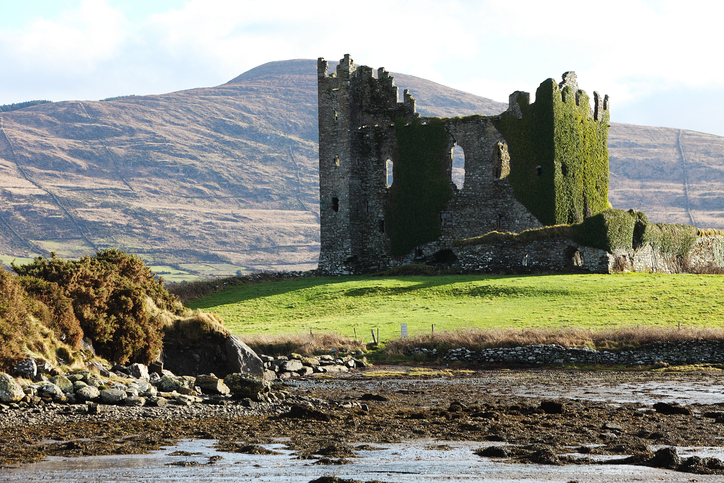
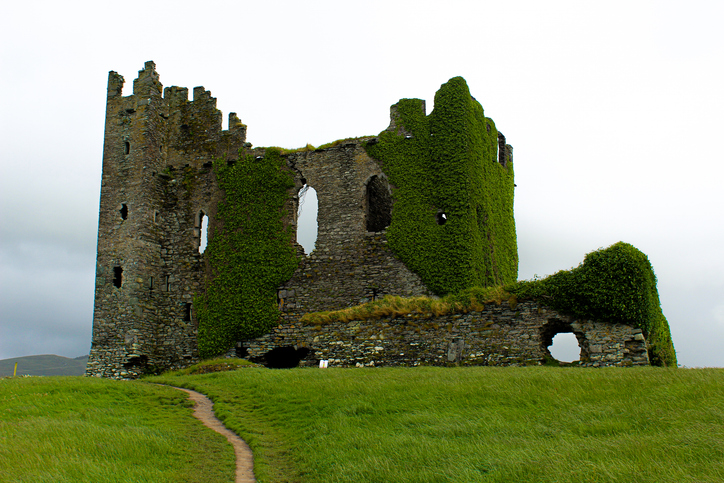
However, you can park nearby in the small roadside parking area and enjoy views of the castle from a respectful distance. This vantage point offers a chance to appreciate the ivy-clad walls, coastal setting, and dramatic backdrop without entering the restricted property.

Many visitors combine this stop with nearby historic sites, including Cahergall Fort and Leacanabuaile Fort, both of which are worth exploring on foot.

Stay As Close As Possible to Ballycarbery

For those wishing to experience Ballycarbery’s landscape more fully, it is possible to stay within close proximity to the castle through a nearby local accommodation. Waking to the Atlantic light and walking the surrounding countryside offers a deeper appreciation of the castle’s setting and its quiet majesty.

If you are interested in staying as close as possible while respecting the private nature of the site, you may explore this nearby AirBNB with a phenomenal view of the castle:
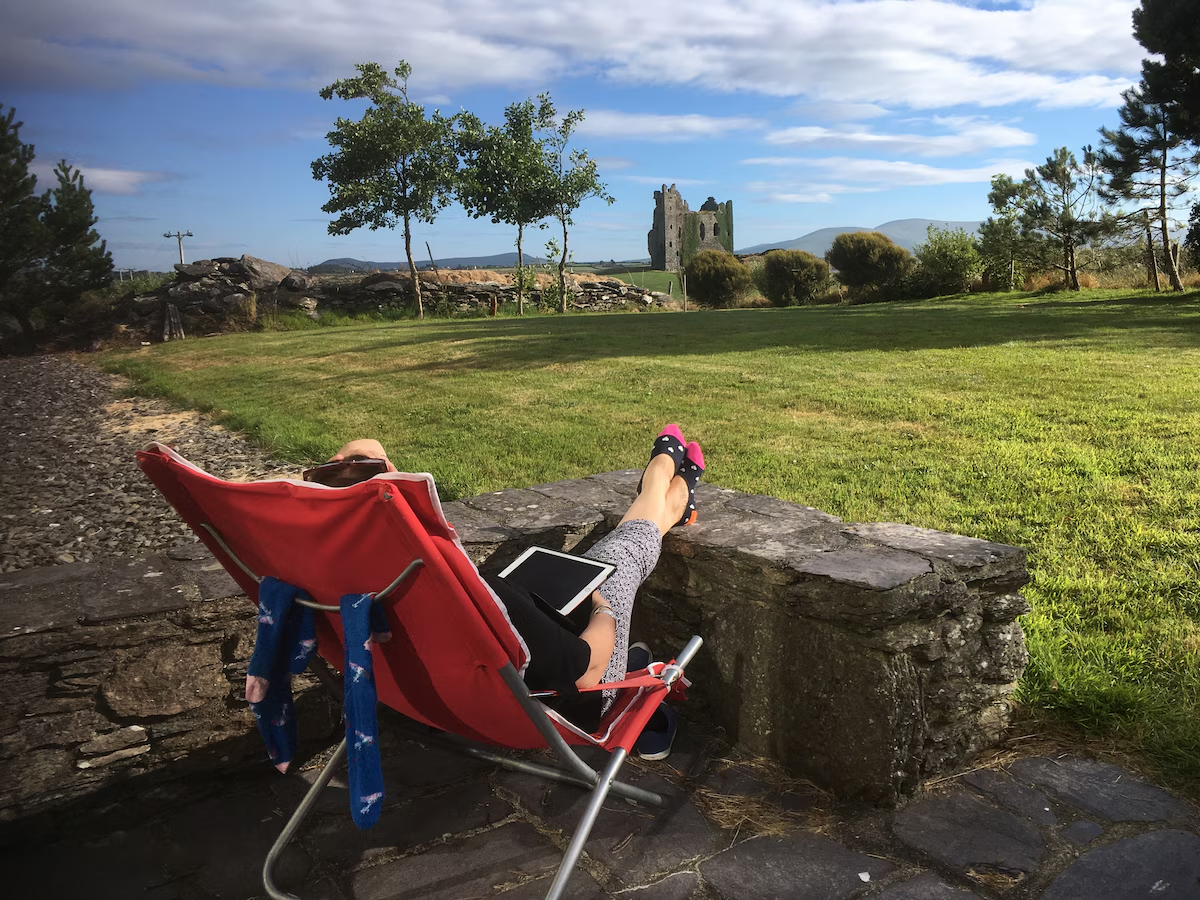
Ballycarbery Castle AirBNB

Book On AirBNB

Contact
If you have a correction, source lead, or wish to provide some other contribution, you can send us a message here!
This form is protected to reduce spam. If it fails, email is fine: clewis4343@gmail.com
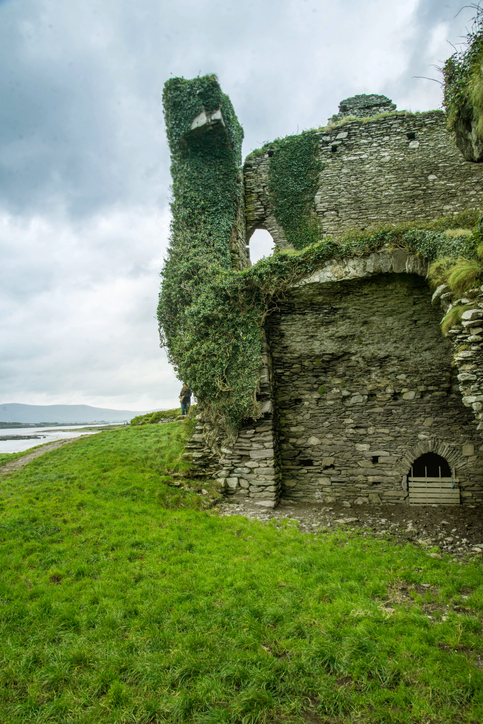
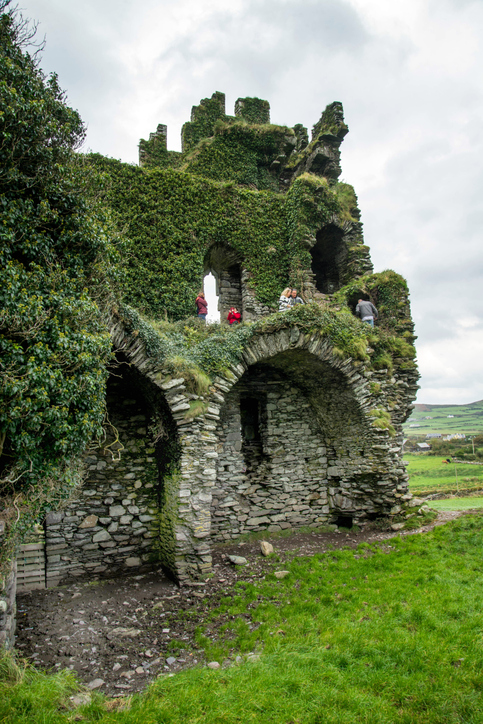
Ballycarbery Castle Ivy
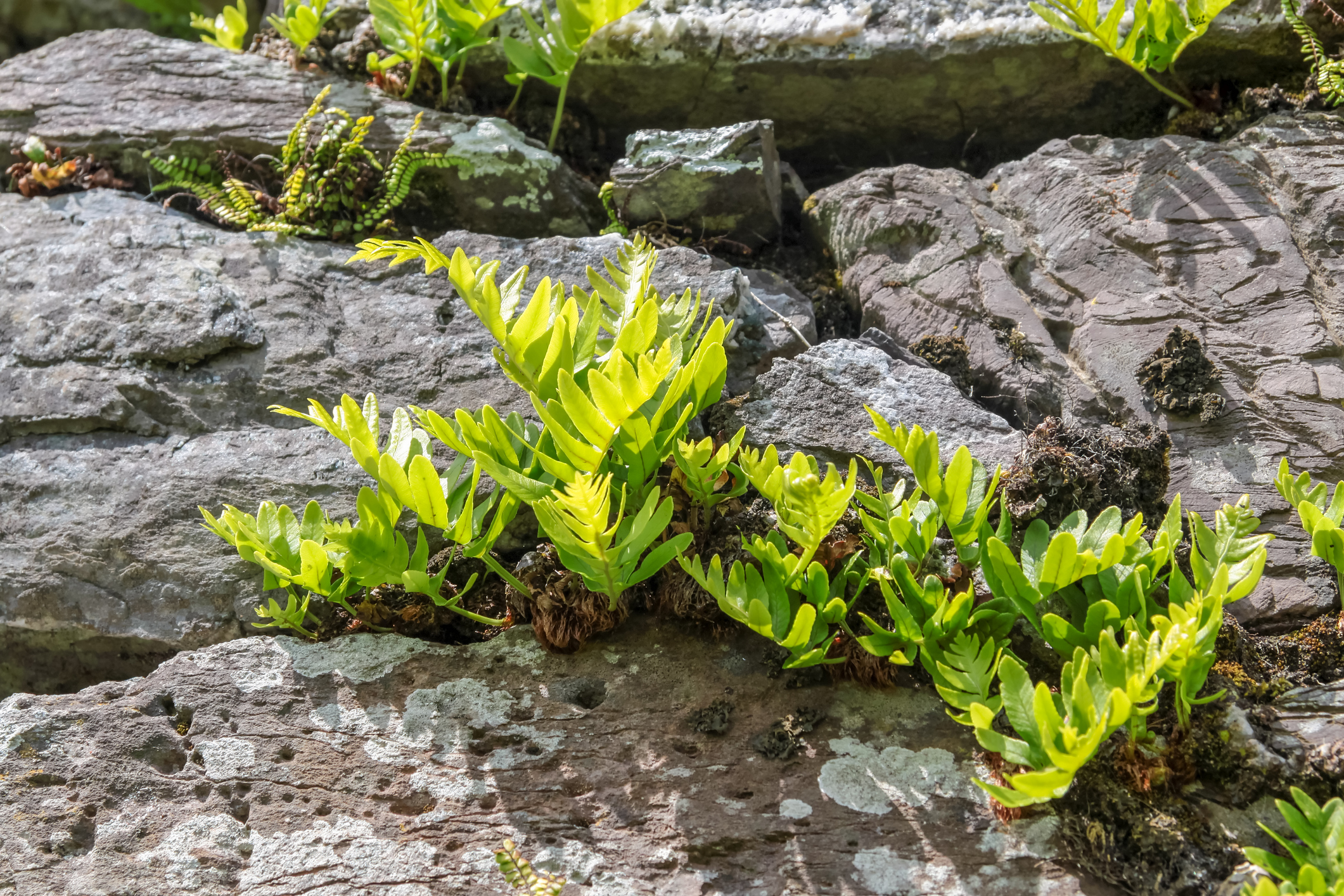
Close up of the ferns (Polypodium vulgare) that live on the walls